The stage
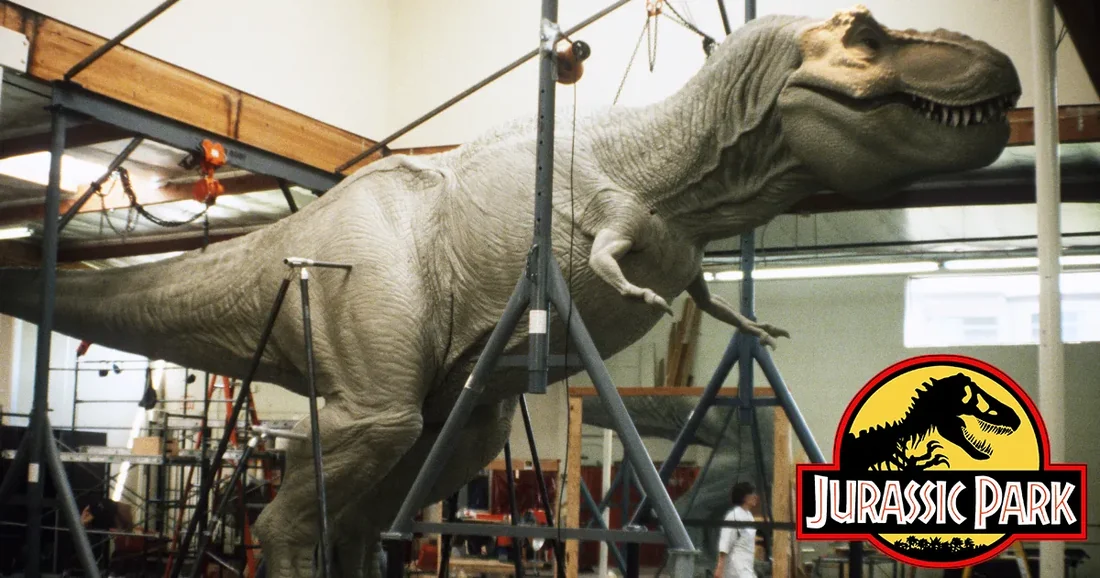
Jurassic Park (1993) integrated photorealistic digital dinosaurs into live-action plates at a scale the industry had not attempted before. American Cinematographer's June 1993 account, filed ahead of the film's release, describes Industrial Light & Magic's Dennis Muren, ASC, as visual-effects supervisor working alongside stop-motion animator Phil Tippett, with Stan Winston's practical, one-fifth-scale dinosaur sculptures serving as reference for models later built into the computer at ILM. The Academy's own record for the ceremony honoring 1993 films lists the Visual Effects award going to Dennis Muren, Stan Winston, Phil Tippett and Michael Lantieri for the film.
What the documents establish
The ASC account establishes a sequencing fact worth preserving against a simplified CGI-replaced-practical-effects narrative: a creature like the film's gallimimus is described as realized only in the computer, but the article frames this as one option within a mixed toolkit that also included Winston's animatronics and Tippett's stop-motion work, chosen shot by shot rather than replacing the practical department outright. The award record corroborates that all three approaches, plus Michael Lantieri's on-set physical effects, were credited together for one film's effects work, rather than crediting a digital team alone. Neither source names a specific rendering or animation software beyond identifying ILM as the vendor, so this entry states none either.
The department view
The account describes a handoff between departments, not a replacement of one by another: Winston's creature shop built physical maquettes at one-fifth scale that the digital department used as modeling reference, meaning the practical-effects department's sculptural work fed directly into the digital pipeline instead of being bypassed. That sequencing, model first, data second, is the department trade-off worth carrying into any comparison with a modern virtual-production asset pipeline, where a physical reference or scan often still precedes a digital asset.
What to check before you build
This is an editorial checklist. A claim that Jurassic Park proved CGI could replace practical effects should be checked against the credited award, which names practical-effects artists Winston and Lantieri alongside the digital contributors, not a digital team alone.
- Does a source credit a single digital breakthrough, or does the award and production record show a mixed practical-and-digital team?
- Which department's physical work, if any, fed the digital asset pipeline, according to the source?
- Is a specific software or technique named in the cited document, or assumed from later industry retellings?
The documented lesson is a sequencing one: the film's digital dinosaurs were built from a practical department's models, not instead of them, a pattern a modern virtual-production asset pipeline still often follows.
Sources & reading trail
Contemporaneous American Cinematographer account naming ILM's Dennis Muren and Phil Tippett and describing Stan Winston's practical sculptures as reference for the digital dinosaurs.
Source published: 1 June 1993 · Retrieved: 16 September 2026
Academy's own record of the Visual Effects award for Jurassic Park, crediting Muren, Winston, Tippett and Lantieri together.
Source published: Not established · Retrieved: 16 September 2026
Vendor documentation, standards and reports establish the entry; the department view is Stagecraft Atlas editorial analysis. This retrospective draft does not imply the site published on the event date.