The stage
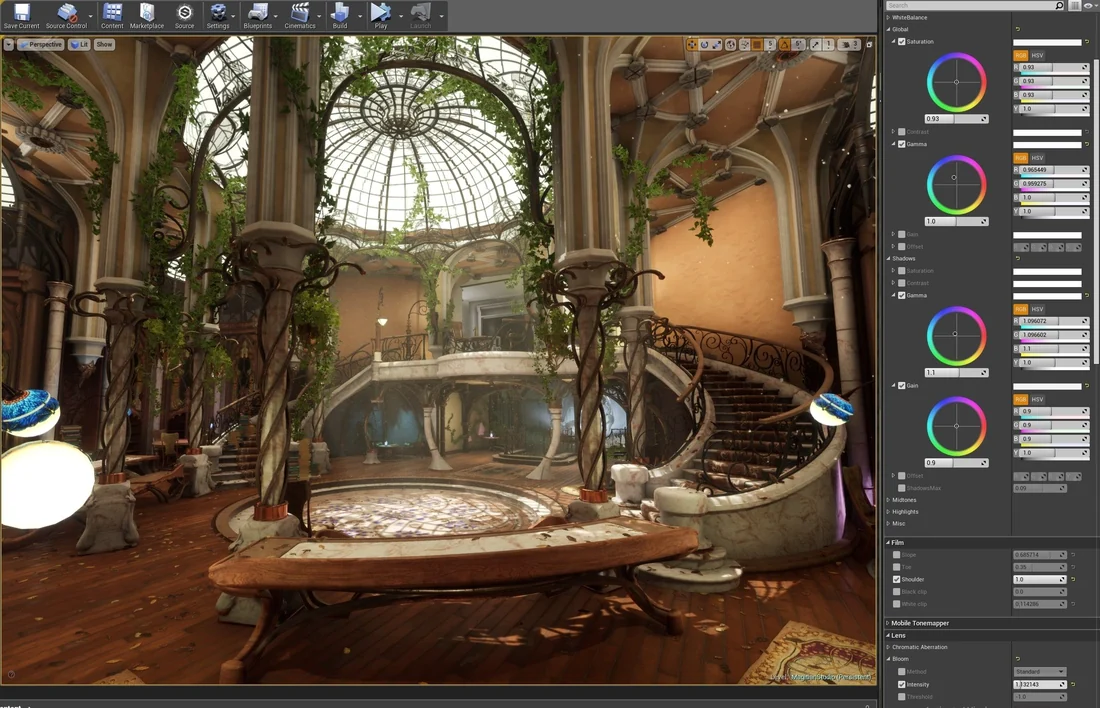
Industrial Light and Magic describes its Virtual Art Dept page, retrieved 16 September 2026, as a full-service team of ILM artists who work directly with filmmakers and virtual-production crews to design the environments and sets appearing on a StageCraft shoot. The page states VAD artists build inside Unreal Engine to help a production decide what should be a physical set piece and what should be rendered content, capture real locations for reference, virtually scout digital locations before a build exists, and produce preliminary environments a DP can pre-light ahead of the shoot day. It attributes a claim to Landis Fields, credited as Virtual Production Visualization Supervisor on Aquaman: filmmakers told him their first day on set felt like a re-shoot, despite never having stood on the physical set before, ILM's own characterization, not an independently measured outcome.
What the documents establish
ILM's page documents what its own department does and how it is staffed; it does not establish that a virtual art department is a fixed, industry-wide job title. Epic Games' Virtual Production Field Guide, Volume 2, published in 2021, defines the virtual art department, or VAD, as a workflow function rather than a brand: developing real-time assets from look development through camera-ready delivery, and acting as liaison between creatives and artists. Read together, the sources show a generic VAD function that ILM has built into a named department; other facilities may organize the same work differently. Neither source states a producer must use the term VAD to contract for this work.
The department view
ILM's page names a VAD Supervisor who works with department heads on creative decisions and manages deliveries downstream, and states VAD artists collaborate with previs artists and the visual effects team. Epic's guide adds that a VAD is typically one of the earliest departments active on a production, since its assets must be optimized for on-set performance, not only for a still frame. ILM's own StageCraft page states the volume work draws on this environment library. The trade-off both documents point to is timing: decisions a traditional art department could defer into production move earlier, front-loading sign-off to reduce surprises once the stage is booked.
What to check before you build
This is an editorial checklist, not a claim from either source. A producer should confirm which vendor or facility provides this function and under what name, since VAD is not contractually standardized; verify how VAD-built assets hand off to the brain bar and LED processing pipeline running the volume; and clarify who holds final sign-off on an environment before it is locked, given ILM's own description assigns that coordination role to a named supervisor rather than to production design alone.
- What name does this facility use for pre-production real-time asset design, and is it the same team that will operate content during the shoot?
- What file formats and optimization targets does the VAD deliver in, and has the brain bar confirmed they load correctly on the volume being used?
- Who signs off on an environment before it is considered camera-ready, and at what point in the schedule does that happen?
ILM's account is a single facility's description of a role it built out in its current form; it is useful evidence of what a mature VAD does, not evidence of an industry standard.
Sources & reading trail
ILM's own description of its VAD's staffing, Unreal Engine workflow, and role feeding StageCraft LED-volume environments.
Source published: Not established · Retrieved: 16 September 2026
Epic Games' generic definition of a virtual art department's role, distinct from ILM's own branded department.
Source published: Not established · Retrieved: 16 September 2026
ILM's own description of StageCraft as the end-to-end virtual-production offering that VAD environments feed into.
Source published: Not established · Retrieved: 16 September 2026
Vendor documentation, standards and reports establish the entry; the department view is Stagecraft Atlas editorial analysis. This retrospective draft does not imply the site published on the event date.