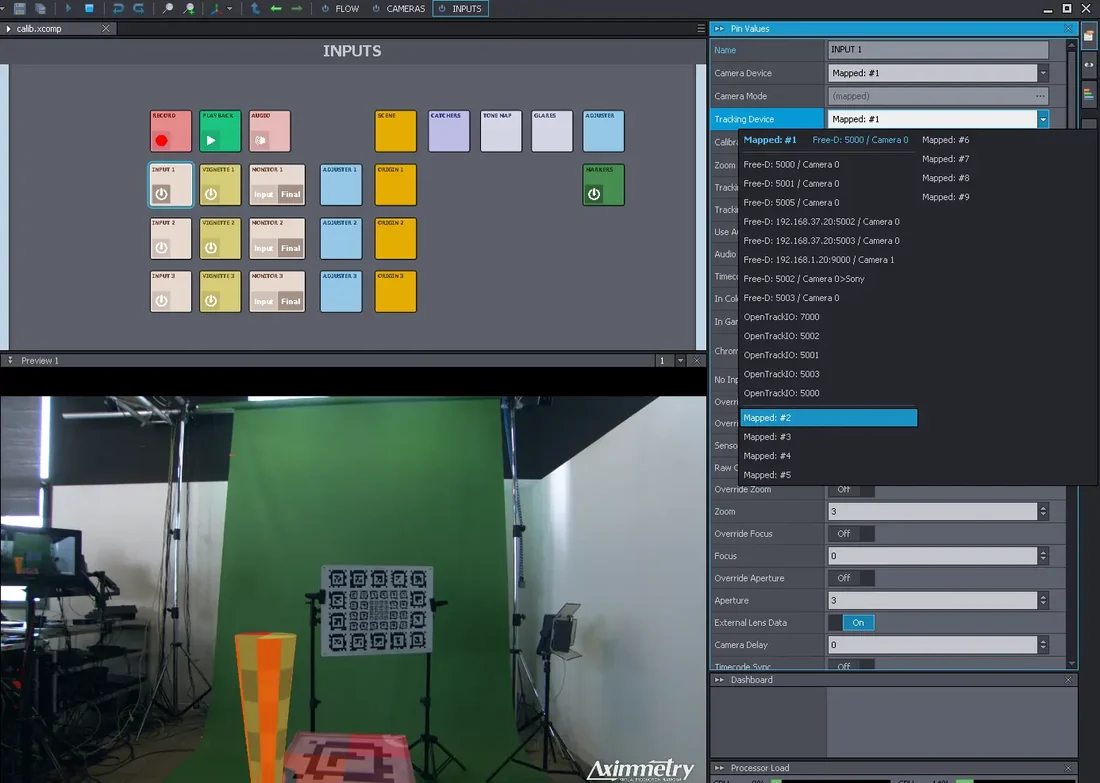
The stage
OpenTrackIO is described in its own documentation, reached today at ris-pub.smpte.org after the protocol's opentrackio.org address redirects there, as 'a free and open-source protocol designed by the SMPTE RIS-OSVP group that seeks to improve interoperability in Virtual Production and beyond.' RIS-OSVP is SMPTE's On-Set Virtual Production working group, itself described on the RIS program page as one of SMPTE's Rapid Industry Solution initiatives, built to produce 'best practices and recommendations within 6-8 months, rather than the traditional 2-5 years required to create a standard.' The protocol documentation is versioned 'v1.0.1' with no separate release date stated, so this entry treats it as a living specification current as of 16 September 2026.
What the documents establish
The specification states it standardizes camera pose data, lens metadata including distortion coefficients, focal length, focus distance and iris and zoom encoder values, timing such as sample rates, timecode and PTP timestamps, and device identification for camera and tracker hardware. It transmits that data as JSON, with optional CBOR encoding, over IPv4 UDP multicast with a defined header. Named contributors include Mo-Sys, Original Syndicate, Concept Overdrive and TrackMen, all camera-tracking or metadata vendors, documenting cross-vendor authorship. The documentation does not state how many vendors have shipped support in the field, so this entry does not claim universal adoption; it reports only what the specification defines and who is named as contributing.
The department view
Before a shared format like this, a volume mixing a tracking vendor's hardware with a different vendor's render engine needed a bespoke data bridge, work that typically fell to the brain bar or a systems integrator wiring the volume together. A single open format both a tracking system and a render engine can read reduces that work to configuration rather than custom development, for vendors who have implemented it. The department-level trade-off the specification itself does not resolve: a shared format standardizes the data moving between systems, not the accuracy or latency of the tracking hardware generating it.
What to check before you build
This is an editorial checklist. Confirm which specific tracking system and render engine a volume is pairing both actually implement OpenTrackIO, and at which version, since the specification's own text does not list current adopters. Do not assume OpenTrackIO support eliminates the need for a systems integrator; it standardizes a data format, not a full integration. Check whether a vendor's OpenTrackIO implementation covers the full field list the specification defines or a subset of it.
- Do both the tracking system and the render engine on this build implement OpenTrackIO, and at what version?
- Does the implementation cover the full metadata set the specification defines, or only part of it?
- Who on the crew still owns systems integration even after adopting a shared tracking-data format?
OpenTrackIO is a documented answer to a real interoperability problem, written by named tracking and metadata vendors under an SMPTE working group built to move faster than a traditional standard. What it does not document is how widely any given production's specific vendors have adopted it, and that remains a question for the build, not the specification.
Sources & reading trail
Defines what OpenTrackIO transmits (camera pose, lens metadata, timing, device info), its transport format, version, and named contributors.
Source published: Not established · Retrieved: 16 September 2026
Describes the SMPTE RIS program and its On-Set Virtual Production (OSVP) working group that produced OpenTrackIO.
Source published: Not established · Retrieved: 16 September 2026
Vendor documentation, standards and reports establish the entry; the department view is Stagecraft Atlas editorial analysis. This retrospective draft does not imply the site published on the event date.