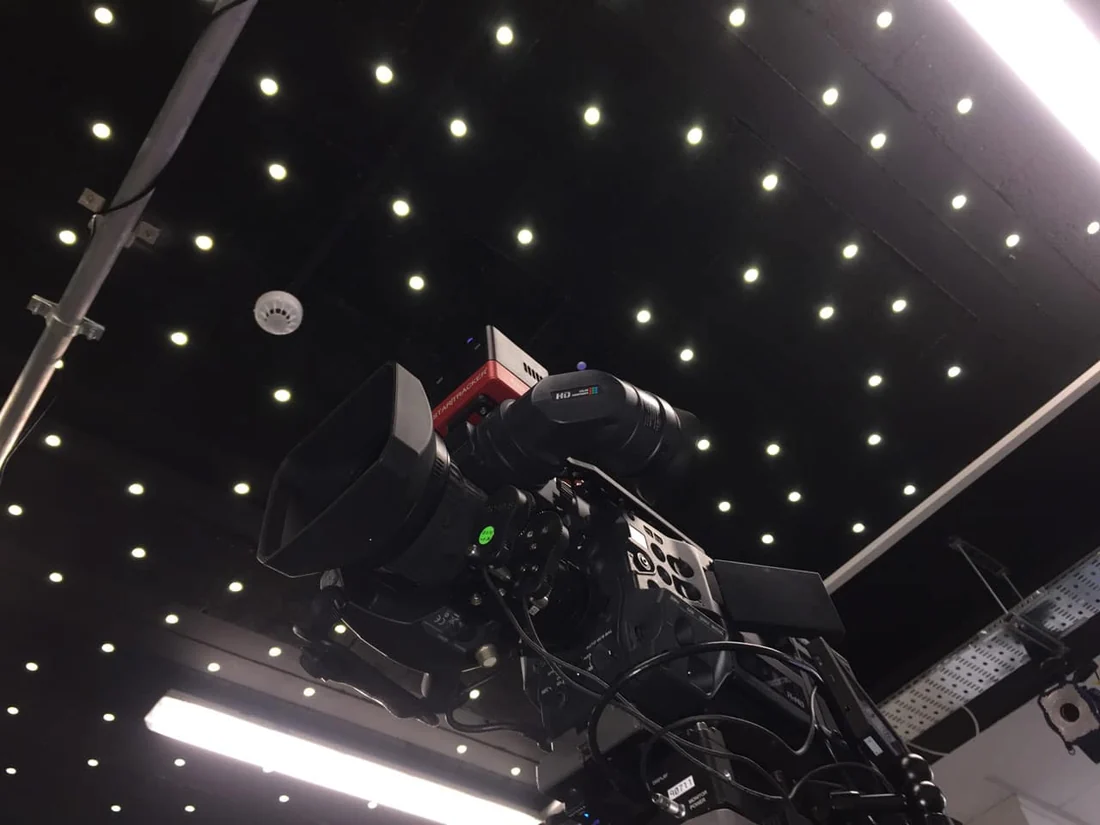
The stage
Mo-Sys describes itself, on its own site as retrieved 16 September 2026, as 'an award-winning, world-renowned manufacturer of virtual production solutions & camera tracking and robotics for Film, HETV & Broadcast,' with 'over 20 years of industry experience.' Its camera-tracking flagship, StarTracker Max, is described on its own product page as 'the world's best-selling absolute camera tracking solution.' The company names more than 100 broadcast customers on its homepage and separately names film and live-event work; both pages are living product descriptions rather than a dated launch announcement.
What the documents establish
The product page states StarTracker Max tracks using 'ceiling, wall or floor mounted retro-reflective stickers or digital LED wall markers,' read by a camera-mounted sensor, an inside-out method the page contrasts with outside-in systems by claiming it is 'immune to occlusion and blind spotting.' Disclosed figures include coverage 'optimized for use in studio spaces up to 100 x 100m with no explicit limit,' a minimum ceiling height of '16+m,' a 130-degree sensor field of view, 'zero drift accumulation,' and a power draw of '20 W.' The page states no positional-accuracy or latency figure, so this entry reports none; 'zero drift accumulation' is the closest verifiable performance claim, describing long-term stability rather than instantaneous precision.
The department view
StarTracker Max's marker-based, inside-out design puts the rigging burden on whoever installs the ceiling or wall markers before a shoot, typically a virtual-production or camera department technician working with the systems integrator, rather than on the camera operator during the shoot itself. Once installed, the vendor's own use cases span LED-wall and green-screen virtual production, broadcast and AR graphics insertion, and robotic camera rigs such as cranes, jibs and Steadicams, suggesting the same tracking layer is meant to serve both a broadcast studio and a film ICVFX stage. The trade-off the page does not resolve: a marker ceiling is a physical installation with its own setup and calibration time, distinct from a markerless or GPS-based system's different but not absent setup burden.
What to check before you build
This is an editorial checklist. Request a specific accuracy and latency figure directly from Mo-Sys for the intended volume size and camera package, since the product page does not publish one. Confirm ceiling height and coverage against the page's stated minimums, 16 or more metres, up to 100 by 100 metres, before assuming a smaller stage can run the system as documented. Verify marker installation and recalibration time with the systems integrator, since the page describes the tracking method but not the crew hours a specific volume's install will take.
- What accuracy and latency figures will Mo-Sys or the integrator commit to in writing for this specific volume?
- Does the stage's ceiling height and floor area meet the minimums the product page states?
- Who installs and recalibrates the markers, and how much crew time does that add to a build or strike?
StarTracker Max's documentation is specific about method and several performance figures, and candid by omission about others. Building around it means asking Mo-Sys for the numbers the public page leaves out, not assuming they match a competitor's marketing.
Sources & reading trail
States StarTracker Max's marker-based inside-out tracking method and its disclosed coverage, ceiling-height, field-of-view, drift and power figures.
Source published: Not established · Retrieved: 16 September 2026
States Mo-Sys's self-description as a virtual-production and camera-tracking manufacturer and names its broadcast, film and live-event customers.
Source published: Not established · Retrieved: 16 September 2026
Vendor documentation, standards and reports establish the entry; the department view is Stagecraft Atlas editorial analysis. This retrospective draft does not imply the site published on the event date.