The stage
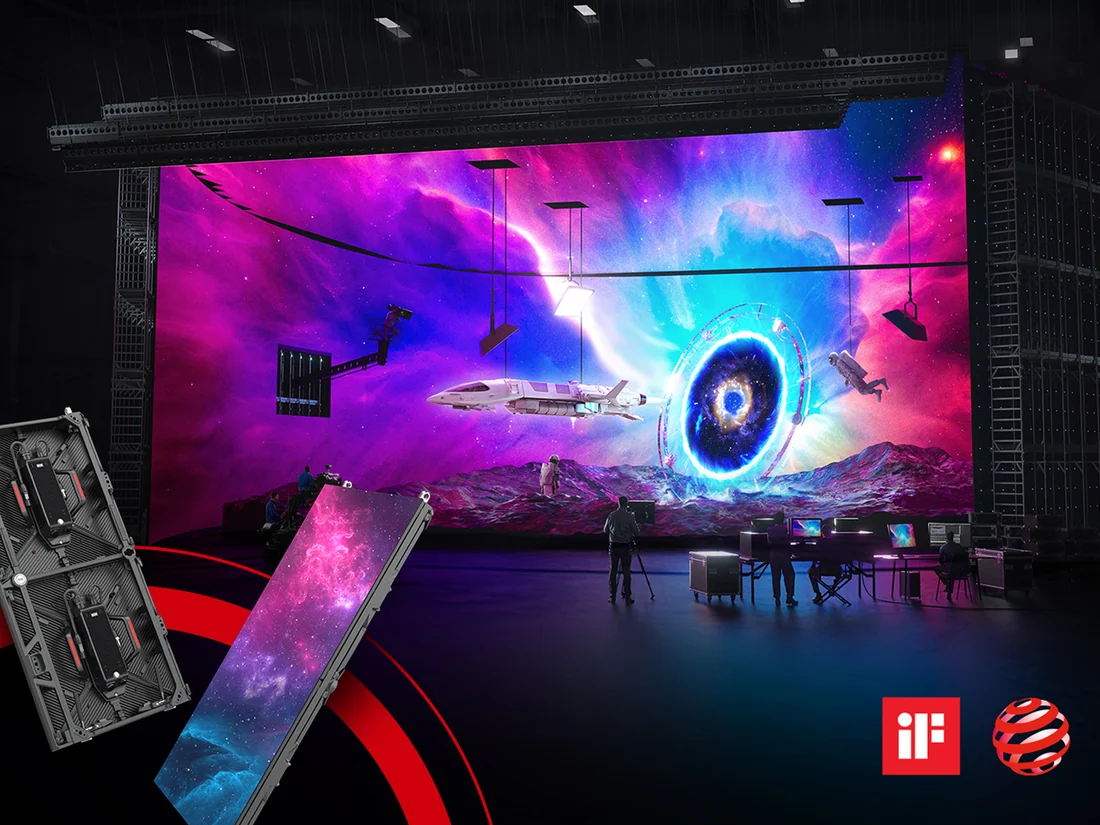
ROE Visual's Diamond product page, retrieved 16 September 2026, describes a fine-pitch LED line positioned differently from the company's camera-first Black Pearl series. Diamond ships in 2.6mm (DM2.6) and 3.906mm (DM3.9) pitches, both at a 3,840Hz refresh rate, and the page states the panel weighs under 5.5 kilograms, assembles with magnets, and hangs in concave or convex configurations. Its listed applications are events, corporate meetings, exhibitions, concerts, and “xR Stages,” and it calls Diamond “a cost-effective LED display” suited to “rental or xR Stages.” That phrasing places Diamond inside virtual production's broader family without the camera-facing claims reserved for other lines.
What the documents establish
Reading Diamond's page against ROE's Black Pearl page shows a deliberate tiering, both stated by the same vendor and comparable as one company's own positioning. Black Pearl calls itself “the Film-Centric LED Panel,” a “broadcast grade” display for “perfect on-camera performance,” citing a 7,680Hz refresh rate aimed at minimizing scan-line artifacts under a lens. Diamond's page makes no equivalent camera-facing claim, mentions no moiré mitigation, and runs at half Black Pearl's refresh rate. This is vendor segmentation, not a bench test, and should be read as ROE describing its own catalog rather than a verified ranking against competitors.
The department view
The distinction matters to whoever scopes a volume's budget: a gaffer, DP, or VP supervisor deciding which walls the lens will resolve versus which exist mainly to bounce interactive light or extend an XR set for an audience rather than a hero camera. ROE's page suggests Diamond suits ceilings, side walls outside the primary angle, or event-style XR builds where a fixed camera position and looser color tolerance are acceptable, while Black Pearl targets walls a production camera moves against directly. Choosing the wrong tier is a cost decision as much as a technical one.
What to check before you build
This is an editorial checklist, not a claim from ROE's page: confirm which walls a hero camera will actually shoot before assigning panel tiers, ask a vendor whether a given pitch has been tested for moiré at the planned distance, and treat “xR Stages” language on a lower-tier panel as an application claim to verify on a real stage.
- Which walls in the volume will the primary camera record directly, and which exist only for ambient light or peripheral XR content?
- Does the stated refresh rate and pitch match what the camera and lens combination needs to avoid moiré at the planned distance?
- Is the vendor's application list, such as events or xR Stages, describing tested camera-facing performance, or general suitability?
ROE's own materials describe Diamond as a deliberately lighter, less expensive alternative to its camera-first panels, not a substitute for them, and reading only a spec sheet risks missing that distinction.
Sources & reading trail
ROE Visual's own specifications and stated use cases for the Diamond panel, including pixel pitch, refresh rate, weight, and application list.
Source published: Not established · Retrieved: 16 September 2026
ROE Visual's own camera-facing positioning and specifications for the Black Pearl line, used as the vendor's own point of comparison against Diamond.
Source published: Not established · Retrieved: 16 September 2026
Vendor documentation, standards and reports establish the entry; the department view is Stagecraft Atlas editorial analysis. This retrospective draft does not imply the site published on the event date.