The stage
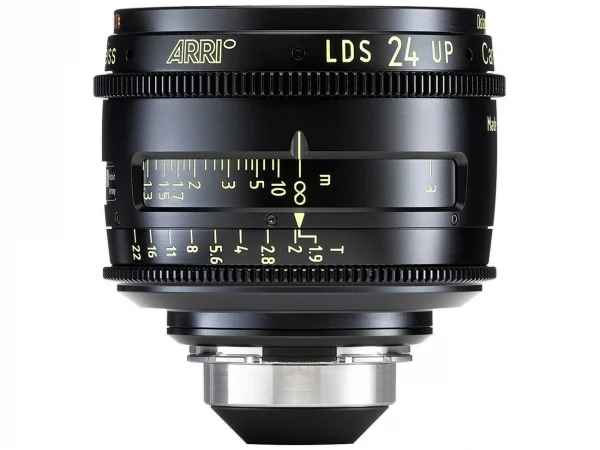
ARRI's Lens Data System, contacts built into the PL mount, first appeared in 2000 in analog cameras such as the ARRICAM Studio and Lite, according to ARRI's own lens-mounts technical page, retrieved 16 September 2026. The page states LDS delivers a lens's current focus, iris and zoom settings to the camera, which interprets the values and passes them to its recording module and to connected accessories such as a Wireless Compact Unit WCU-4 or Master Grips. A newer version, LDS-2, ships on the LPL mount and, ARRI states, removes the need for initial calibration through absolute encoders, uses an interface 8.7 times faster than LDS-1, and debuted on ARRI's own Ensō and Signature Prime lenses before being licensed to other lens and camera manufacturers.
What the documents establish
ARRI's page states explicit, named compatibility, not a blanket claim: it offers compatibility with the Cooke /i protocol specifically in ALEXA, ALEXA Mini and AMIRA cameras, and states that ALEXA 35, ALEXA Mini LF and ALEXA LF support both LDS-1 and LDS-2. It does not name other licensed lens or camera manufacturers, so this entry does not assert universal compatibility beyond what ARRI states. A second ARRI document, its metadata reference page, distinguishes dynamic metadata, updated per frame, from static metadata, delivered per shot, and states ARRI writes camera-system metadata to the SMPTE RDD55 specification over its own Camera Access Protocol. Together the pages show a format with a defined lineage and a stated, limited compatibility list, not a universal standard.
The department view
On an LED-volume stage, the camera assistant and DIT depend on this data leaving the lens correctly: focus, iris and zoom values recorded per frame let a render engine's virtual camera match the real lens's optical state, keeping a foreground subject and a rendered background in registration. The trade-off ARRI's page records is calibration time: LDS-1 requires an initial encoder calibration when a lens is mounted, while LDS-2 is stated to remove that step, mattering most on a stage doing frequent lens changes.
What to check before you build
This is an editorial checklist. Confirm which specific ARRI camera and lens combination is in use, since LDS-1 and LDS-2 compatibility is stated per camera model, not as a blanket claim across ARRI's line. Verify whether a non-ARRI lens on set actually carries an LDS-2 license, since ARRI names only its own Ensō and Signature Primes as first adopters. Check whether the production's metadata pipeline reads the SMPTE RDD55 file header ARRI writes, or expects a different format, before assuming interoperability.
- Does this camera model support LDS-1, LDS-2, or both, per ARRI's own compatibility statement?
- Is the lens on set one of the specific models ARRI or a named licensee has qualified for LDS-2?
- Does the post pipeline actually consume the RDD55 metadata ARRI states it writes, or a separate export?
Read against its own documentation, ARRI's lens-data system is a versioned protocol with a stated compatibility list and a documented calibration trade-off between generations, not an unqualified claim of universal lens support.
Sources & reading trail
States LDS's 2000 origin, what it transmits, Cooke /i compatibility, and LDS-2's calibration and speed differences plus named first-adopter lenses.
Source published: Not established · Retrieved: 16 September 2026
States the dynamic/static metadata distinction and ARRI's use of the SMPTE RDD55 specification and its Camera Access Protocol.
Source published: Not established · Retrieved: 16 September 2026
Vendor documentation, standards and reports establish the entry; the department view is Stagecraft Atlas editorial analysis. This retrospective draft does not imply the site published on the event date.