The stage
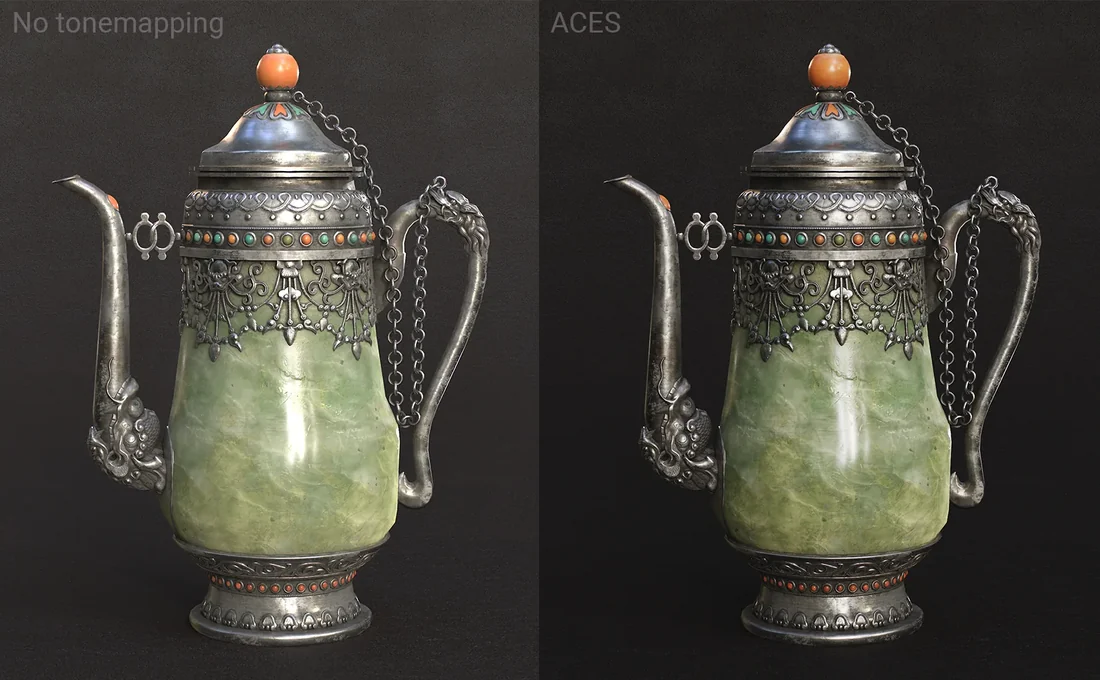
On 5 September 2024, the aces-aswf/aces repository, the Academy Color Encoding System's own reference repository maintained under the Academy Software Foundation, published its first “v2.0.0” release, per GitHub's own release record; a further release, v2.0.0+2025.04.04, followed on 4 April 2025. ACES's own documentation, retrieved 16 September 2026, describes the headline change as newly designed rendering transforms delivering “a less aggressive tone scale with reduced mid-tone contrast and a gentler highlight rolloff,” alongside redesigned output transforms offering “robust gamut mapping for improved perceptual uniformity and reduced clipping artifacts.”
What the documents establish
The GitHub release is a dated, verifiable publication event; the documentation page is a living description of the current system as retrieved today, not itself a dated announcement, and the entry treats the two accordingly. Neither source names a specific virtual-production stage or LED-wall vendor running ACES 2, so this entry does not claim any named volume has adopted it; it establishes only what changed and when it first shipped. ASC's own MITC committee list shows an organizational link to on-set color work: it names a dedicated “ACES 2.0 Color Management Committee,” chaired by Annie Chang, alongside ASC's Virtual Production Committee and ICVFX Display Technology Working Group, an organizational fact rather than a technical endorsement of any volume.
The department view
The DIT and the LED volume's brain-bar team need one color encoding that a camera's working space, an on-set LUT box and the render engine driving the wall can all agree on; a new rendering and output-transform version changes the reference math every one of those tools must implement consistently on both sides of the wall, not only in the grading suite. The documented trade-off: the documentation page frames the tone-scale and gamut-mapping changes as feature-request-driven, meaning existing per-show LUTs and calibrations built against the prior tone scale need re-validation, not a drop-in swap.
What to check before you build
Editorially: confirm which ACES version, 1.x or 2.x, a render engine, camera vendor and LED-processing chain each actually implement before assuming interoperability; do not treat a bare “ACES-compliant” claim as specifying a version; and weigh the documentation page's own retrieval date against a vendor's claim date, since ACES 2 documentation continues to be revised.
- Which ACES version does each link in the chain, camera, LUT box and render engine, actually implement?
- Does a vendor's “ACES-compliant” claim specify a version, or leave it ambiguous?
- Have existing per-show LUTs been re-validated against ACES 2's revised tone scale and gamut mapping?
The Academy's own repository dates ACES 2's first release precisely, and its own documentation names a rendering-pipeline change substantial enough that a volume's color chain cannot assume the prior version's math still applies.
Sources & reading trail
The Academy's own ACES repository record of the first ACES 2.0.0 release, dated 5 September 2024.
Source published: 5 September 2024 · Retrieved: 16 September 2026
Describes the rendering and output-transform changes that define ACES 2 versus ACES 1.
Source published: Not established · Retrieved: 16 September 2026
Names ASC's ACES 2.0 Color Management Committee alongside its Virtual Production and ICVFX committees.
Source published: Not established · Retrieved: 16 September 2026
Vendor documentation, standards and reports establish the entry; the department view is Stagecraft Atlas editorial analysis. This retrospective draft does not imply the site published on the event date.