The stage
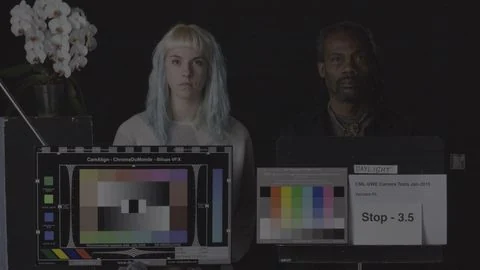
On 19 July 2026, at the Academy Software Foundation's Open Source Days, the foundation's own announcement confirmed the release of Standard Evaluation Material 3 for Virtual Production, StEM3-VP, contributed by the American Society of Cinematographers through its Motion Imaging Technology Council. The assets, available through ASWF's Digital Production Example Library, include pre-built Unreal Engine environments donated by virtual-production studios, 2D driving plates and test elements, and a reference scene, Warped: CyberCity, shot by David Klein, ASC, in a working volume with a professional crew. StEM3-VP is the third generation of the ASC's Standard Evaluation Material initiative, following an earlier StEM2 project hosted in the same library.
What the documents establish
The announcement is a joint record from two named organizations, not a vendor's marketing claim: ASWF hosts the assets under its Digital Assets License, and quotes Michael Goi, ASC, ISC, co-chair of the ASC's Motion Imaging Technology Council, stating the project exists because a lot of us cinematographers have been on sets where virtual production screens were in use and they were not properly calibrated, with color rendition and dynamic range inconsistent between stages. That is a documented statement of the problem StEM3-VP addresses, not an audit of how many stages have this issue. ASWF's own site, retrieved 16 September 2026, states its purpose is to increase contributions to the industry's open-source base and provide a neutral forum for cross-project work, framing why a cinematographer-authored suite sits in an open-source library. Neither document claims StEM3-VP is a mandatory test on any stage.
The department view
The intended user is the DP or colorist, evaluating a volume before a shoot rather than after a problem appears on camera. StEM3-VP's purpose is to let a cinematographer visually check an LED panel's performance against reference content, interiors and exteriors, day and night, before committing a production day to a stage. The Warped: CyberCity scene, written by Goi and ASC associate Jay Holben, directed by Holben, gives a crew real footage to compare against what their volume produces. The unresolved trade-off is process: test material does not guarantee a production schedules time to run it before principal photography.
What to check before you build
This is an editorial checklist beyond what the announcement states. A production should confirm which StEM3-VP assets are licensed for its render and processing chain under the ASWF Digital Assets License; whether the volume's calibration was checked against StEM3-VP rather than an undocumented test; and whether the range of conditions StEM3-VP covers, per Goi's stated goal, matches what the production will shoot.
- Has this stage been calibrated against StEM3-VP or an equivalent published reference before our shoot dates?
- Which license terms govern our use of the donated Unreal Engine environments in StEM3-VP?
- Do the day, night and weather conditions in StEM3-VP's suite match what our production will actually shoot?
A cinematographer-authored, foundation-hosted evaluation suite is a documented attempt to solve a named problem, uncalibrated volumes, not a promise that virtual production has matured. It gives a department a checkable reference instead of a judgment call, the kind of standard this guide treats as evidence, not a vendor's claim.
Sources & reading trail
States StEM3-VP's contents, its ASC MITC origin, quotes from Michael Goi and David Morin, and its DPEL hosting and licensing.
Source published: 19 July 2026 · Retrieved: 16 September 2026
States the Academy Software Foundation's mission to coordinate open-source contributions across the industry.
Source published: Not established · Retrieved: 16 September 2026
Vendor documentation, standards and reports establish the entry; the department view is Stagecraft Atlas editorial analysis. This retrospective draft does not imply the site published on the event date.