The stage
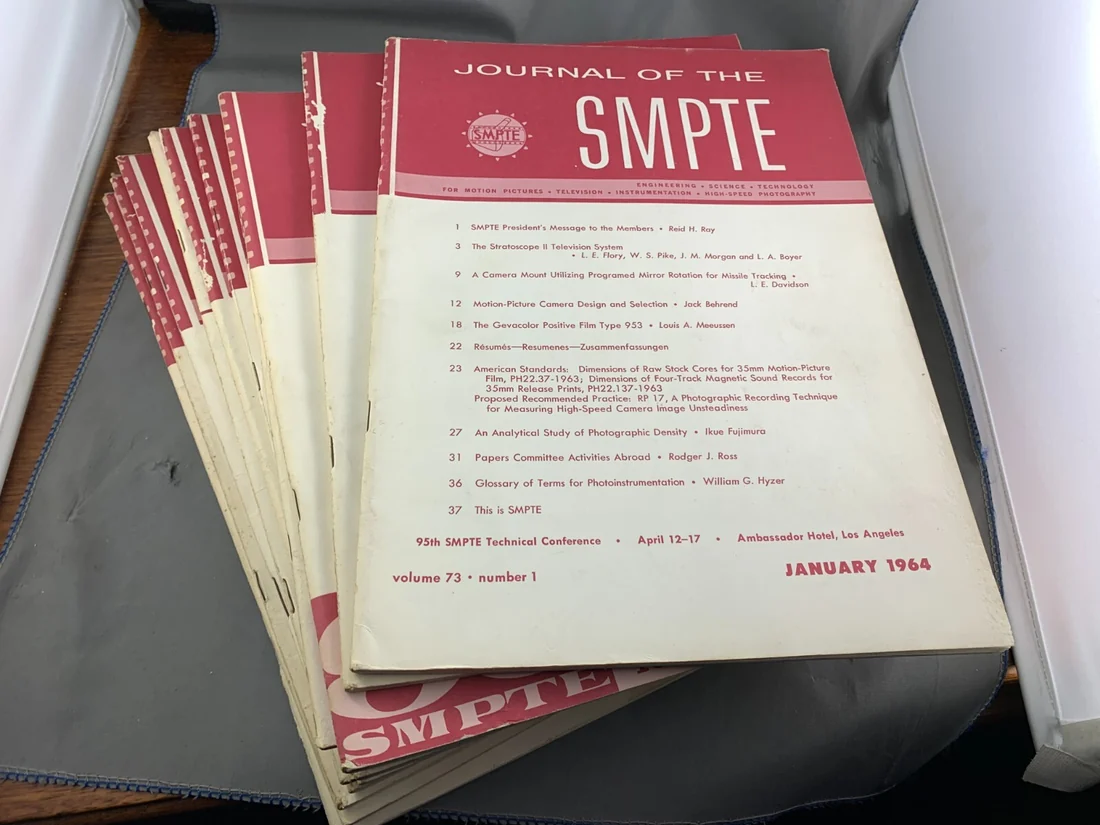
The SMPTE Motion Imaging Journal page, retrieved 16 September 2026, calls itself the society's “source for the latest insights, trends, and technology shaping the motion imaging industry,” publishing peer-reviewed papers and applications-and-practices articles. SMPTE's separate digital library landing page states the journal has published “for more than 100 years,” placing its archive well before the LED-volume cycle this site tracks, through decades of process photography, optical compositing, and camera-tracking technique. Full access requires logging in through the SMPTE Portal, and the journal page notes portal cookies for the digital library are valid for 30 days.
What the documents establish
What these two pages establish is narrower than a history lesson: a searchable, member-access archive exists, has operated under SMPTE's name for over a century, and organizes its current front end by recent issue rather than historical topic. Neither page inventories what any specific historical paper says about process photography, rear projection, or optical printing, and no single uncited paper's findings should be summarized here as fact. Both pages are living, SMPTE-authored resources describing the same library from different angles, corroborating its existence and scope without corroborating any particular historical claim inside it.
The department view
For a technical artist or researcher, the archive's practical use is as a citation trail, not a substitute for reading a paper. A department head documenting why a modern tracking or genlock convention exists in its current form can use the journal's index to find the original peer-reviewed paper rather than relying on a secondhand retelling, but that only works once a specific paper is located, opened, and checked against its own text. The trade-off is time: proper use of a century-old archive means budgeting hours to read primary papers rather than treating the archive's existence as itself a citable fact.
What to check before you build
This is an editorial recommendation, not a claim SMPTE's pages make directly: before citing any historical process-photography or compositing technique to a production team, locate the peer-reviewed paper in the SMPTE library, confirm its publication date and author, and check whether a later paper superseded or corrected it.
- Has the specific paper being cited actually been opened and read, rather than assumed from a title or abstract alone?
- Does SMPTE's library show a more recent paper that revises or contradicts the older one being cited?
- Is portal access required for the paper in question, and has that access been confirmed before promising a source to a reader?
SMPTE's own pages support one narrow claim reliably: a century-plus peer-reviewed record exists and is searchable with portal access. Anything more specific about a historical paper's findings requires opening that paper directly.
Sources & reading trail
SMPTE's own description of the Motion Imaging Journal's scope, portal-login access requirement, and digital-library link.
Source published: Not established · Retrieved: 16 September 2026
SMPTE's own digital-library landing page stating the journal has published for more than 100 years.
Source published: Not established · Retrieved: 16 September 2026
Vendor documentation, standards and reports establish the entry; the department view is Stagecraft Atlas editorial analysis. This retrospective draft does not imply the site published on the event date.